
LAUREATE IN THE “BREAKTHROUGH” CATEGORY
FOR DECIPHERING THE MOLECULAR MECHANISMS OF BIOLUMINESCENCE AND CREATING GLOWING PLANTS
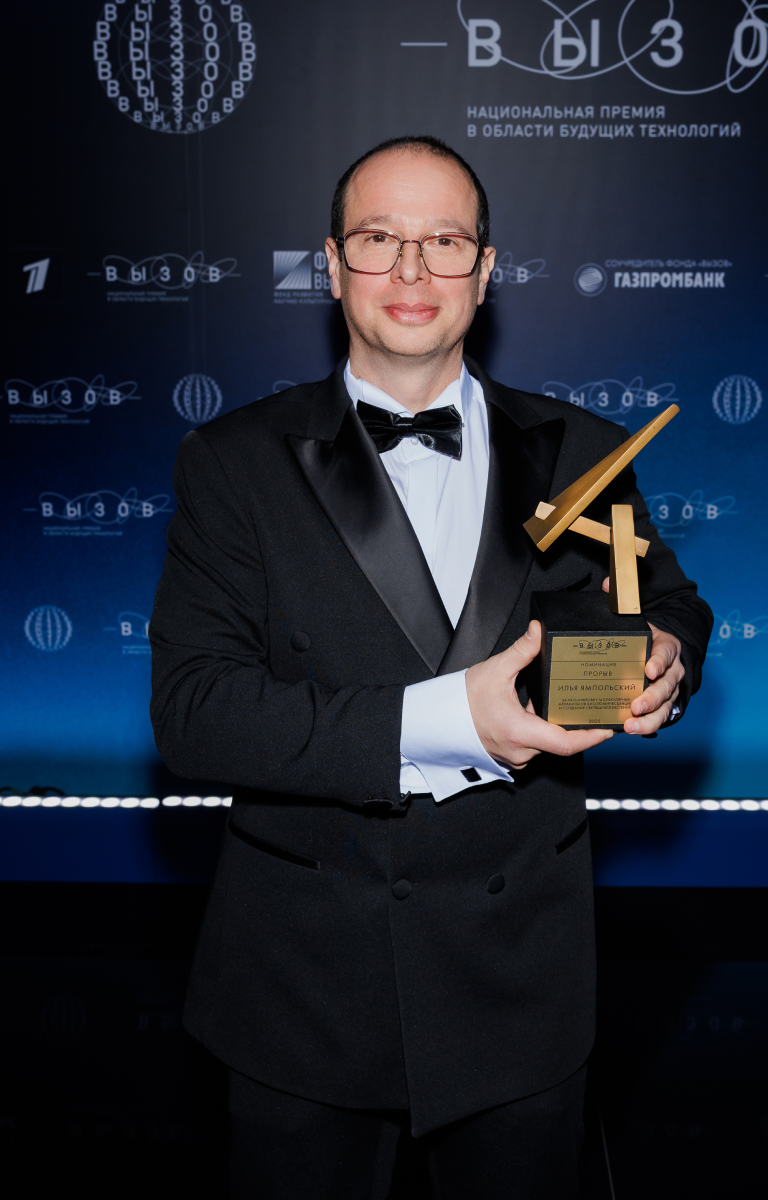
ILIA YAMPOLSKY
Doctor of Chemical Sciences, Senior Researcher, Laboratory of Metabolic Pathways Chemistry, Shemyakin and Ovchinnikov Institute of Bioorganic Chemistry RAS.
Over 3,900 citations, over 130 publications, h-index = 34
About the Laureate
Bioluminescence – the light emitted by living organisms – has long fascinated humanity. Prior to the laureate's work, only seven luciferins were known to provide luminescence in certain bacteria, fireflies, worms, dinoflagellates, crustaceans, and jellyfish. Ilia Yampolsky and his colleagues managed to discover new luciferins, including that responsible for fungal luminescence, decipher the complete biochemical pathway of luminescence, and then – for the first time in the world – use genetic engineering methods to fully transfer this entire biochemical pathway, with all necessary genes, into plants. This led to the creation of the first glowing plants in history. (более формально) The laureate's team subsequently managed to increase the luminosity of these plants thousandfold and establish the commercial production of glowing houseplants.
However, the laureate’s achievements extend beyond this. The method of genetically engineered bioluminescence using the luciferin/luciferase system is now widely applied in biology and biomedical research, offering several advantages over traditional markers like fluorescent proteins, as it produces no background radiation and is non-phototoxic. Moreover, the created method of transferring entire biochemical pathways from one kingdom of life to another paves the way for engineering new traits in eukaryotes, including atmospheric nitrogen fixation.
The VYZOV Prize is awarded for deciphering the molecular mechanisms of bioluminescence and creating glowing plants.
Bio: Ilia V. Yampolsky was born in 1979 in Moscow. He graduated from the biology class at Moscow School No. 1543. From 1996 to 2001, he studied at the Higher Chemical College of the Russian Academy of Sciences. As a student, he worked in the laboratories of the N.D. Zelinsky Institute of Organic Chemistry RAS and the A.N. Nesmeyanov Institute of Organoelement Compounds RAS. Since 2000, he has been working at the Shemyakin and Ovchinnikov Institute of Bioorganic Chemistry RAS. In 2009, he got Ph.D. in Biochemistry for his work on studying the structure of chromophores in GFP-like fluorescent proteins. In 2016, he defended his doctoral dissertation (Doctor of Chemical Sciences) dedicated to the study of new luciferins – substrates for bioluminescent reactions.